

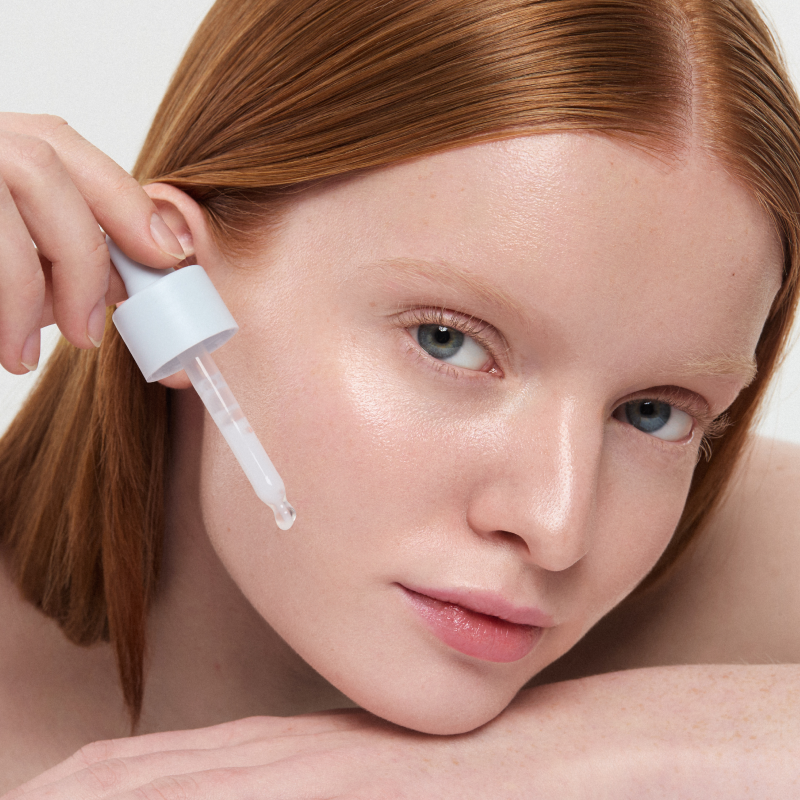


DEEP DIVE: PANTHENOL
Panthenol is often known as a “quiet performer” in skincare. Amid trends and hyped-up ingredients, panthenol has been an underrated constant for decades. It can soothe the skin and reduce transepidermal water loss (TEWL). In this deep dive, we’ll break down the biochemical mechanisms behind this all-rounder and show you why this ingredient is the scientific foundation for your daily glow.
PANTHENOL AND ITS EFFECTS ON THE SKIN
Panthenol, also known as provitamin B5 or dexpanthenol, is a true all-rounder in dermatology and much more than just an ingredient in emergency creams—which is what it’s generally known for. But is panthenol also good for the face? A deep dive beneath the surface reveals: Thanks to its small molecular size, panthenol can penetrate the epidermis effectively—unlike other ingredients that remain on the skin’s surface and don’t penetrate at all. Once in the skin, panthenol is converted into pantothenic acid (vitamin B5) via enzymatic oxidation. Why is this conversion crucial? Vitamin B5 is the key building block for coenzyme A, which is involved in lipid synthesis processes. Specifically, this means that the skin’s barrier function is supported and moisture loss is reduced. In this way, panthenol supports the skin’s natural regeneration processes.
Compared to pure vitamin B5, panthenol penetrates the skin more effectively while remaining well-tolerated. It provides intensive skin care and moisturizing benefits and can strengthen the skin barrier. Especially for dry skin, it can increase the skin’s water content. It works primarily in the stratum corneum (your outermost layer) and optimizes the molecular mobility of the lipid lamellae and proteins there. Think of it this way: the building blocks of your skin can align more orderly with one another. The result? Transepidermal water loss (TEWL) is significantly reduced. So your skin not only retains moisture better, it also doesn’t lose it as easily to the environment.